

I’m going to tell you something that most photographers don’t say about how to prepare your kids for family photos: the preparation that actually matters has almost nothing to do with your children’s behavior. It has to do with yours. They can feel your energy, and you set the tone.
As an Alameda mom of two and a Bay Area family photographer, I’ve photographed enough families to know that the sessions that go well have one thing in common: parents who show up relaxed, present, and ready to let the afternoon be what it is. Everything else — toddler cooperation, perfect outfits, ideal weather — is secondary.
This guide is about how to actually prepare your kids for family photos — not how to get them to perform, but how to set up the conditions for something real.
(If you’re specifically navigating life with a toddler who has very strong opinions about photographers, I wrote a whole separate post on that: How to Survive Family Photos with Toddlers in the Bay Area.)
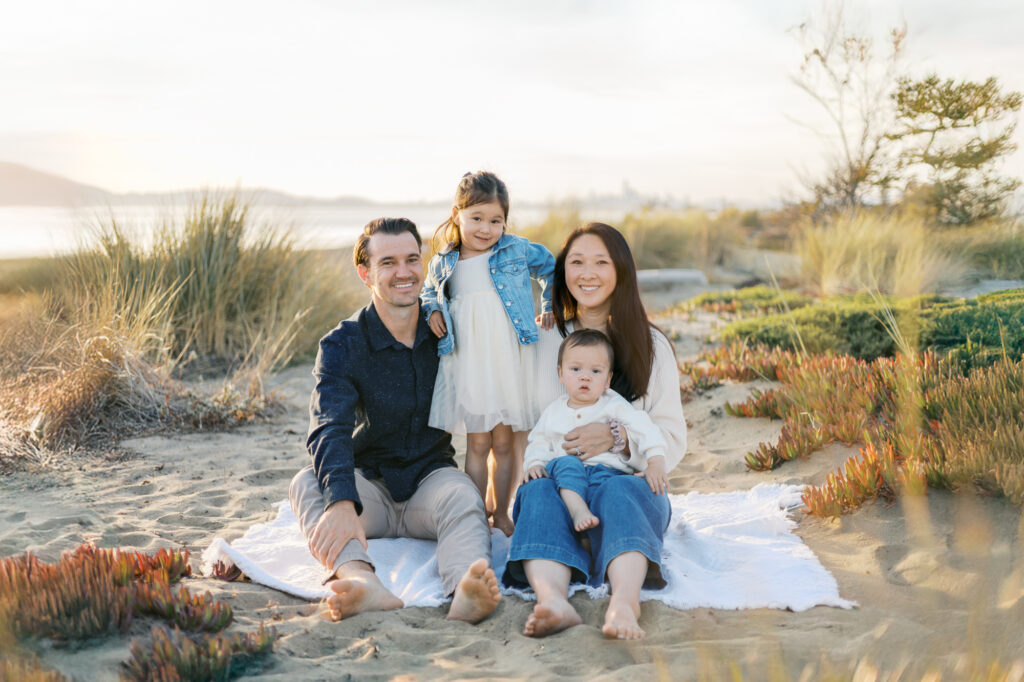
How to Prepare Your Kids for Family Photos: The Days Before
Don’t make it a big deal
The worst thing you can do before a family session is build it up to your children. Big deals create pressure. Pressure creates the exact opposite of what you want — stiff, self-conscious kids who feel like they’re being evaluated.
Instead, mention it casually a day or two before. Something like: we’re going to the park and someone’s going to take some pictures of us, and then we can get ice cream after. That’s it. No rehearsals. No “you need to smile and be good.” No lengthy explanations of why this matters.
The goal is for them to arrive without any particular expectations — because kids without expectations just play, and playing is exactly what we want. The single most effective way to prepare kids for family photos is to make it feel like no preparation is happening at all.
Talk about it positively but briefly
If your child asks questions, keep your answers light. “Is it going to be fun?” — yes. “Do I have to smile?” — nope, you just have to be you. “Will it take forever?” — it’ll go really fast, and there are snacks.
What you want to avoid: any language that puts the outcome on them. “I really hope you’ll cooperate” or “please don’t act like you did at Grandma’s” tells them you’re already worried, and kids read that immediately.
Sort out outfits the night before
Get everyone’s clothes decided and ready the evening before so the morning isn’t chaotic. For guidance on what actually works for Bay Area family sessions, the complete family photography guide has a full section on outfit coordination.
The main thing: make sure kids are comfortable. A child in scratchy, formal, or “too nice to get dirty” clothes is a child who is thinking about their clothes for the entire session. Comfortable kids move freely, and freely moving kids photograph beautifully.
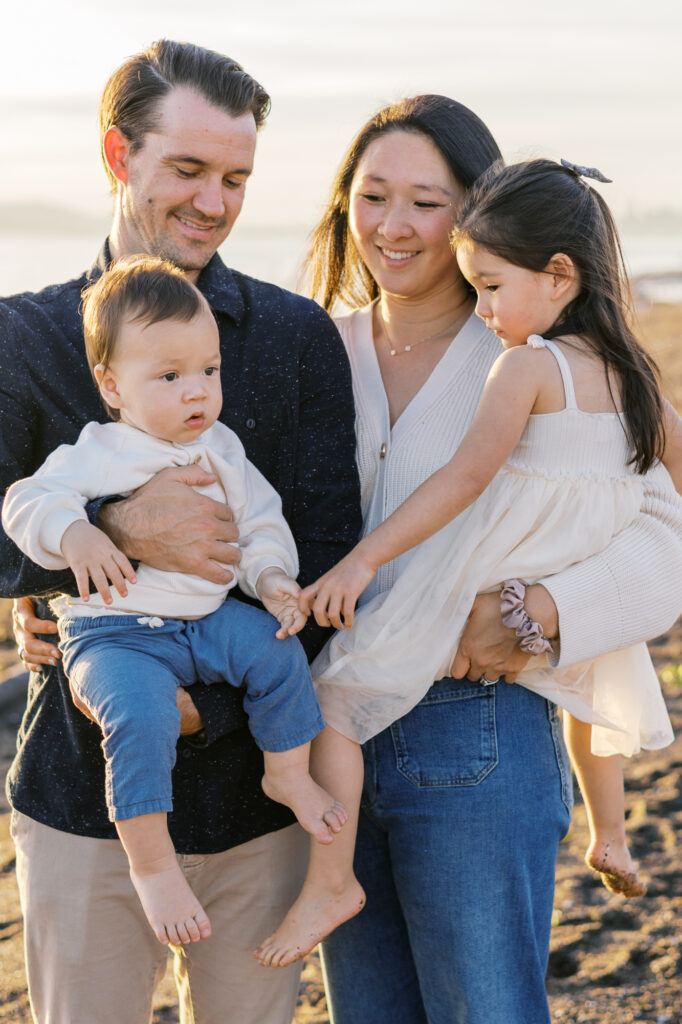
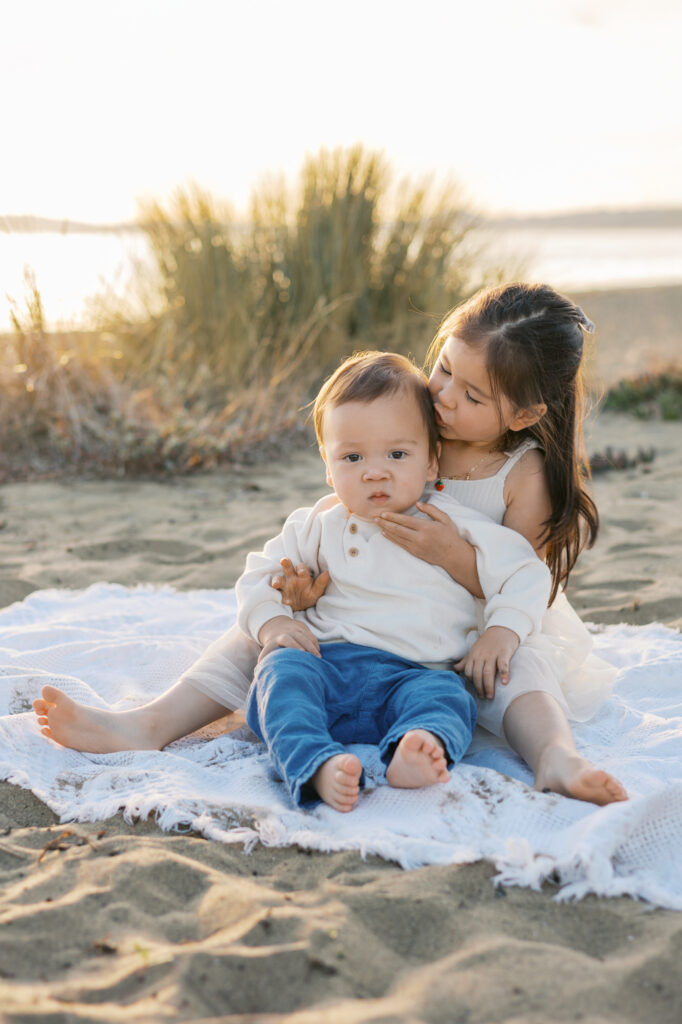
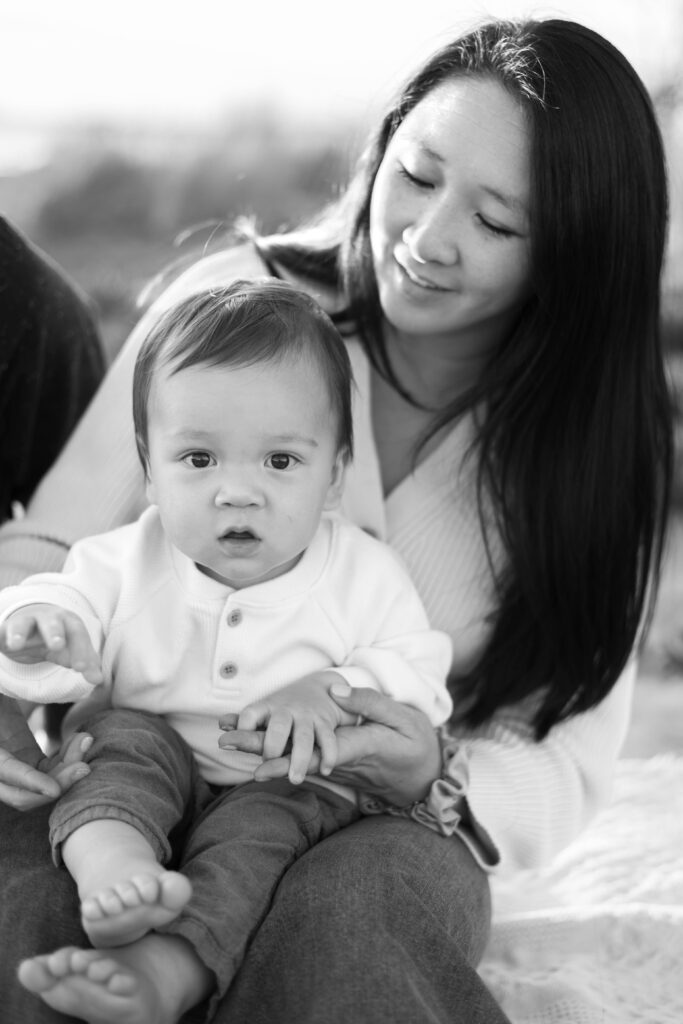
How to Prepare Your Kids for Family Photos: The Morning Of
Keep it normal
Regular morning, regular routine. Avoid anything overstimulating or exhausting before the session — a birthday party, a long hike, a big sports event. We want everyone arriving with energy, not already spent.
Screens right before the session can also be tricky. Tearing a child away from a tablet mid-session tends to mean the first ten minutes are spent recovering from that, rather than warming up. If screens are part of your morning routine, try to build in at least 30 minutes between screen time and leaving the house.
Feed everyone
Hungry children are not cooperative children. Have a real meal before the session and bring snacks in your bag — non-messy ones (pretzels, dry cereal, a granola bar, a pouch — not berries, not anything with sauce). A mid-session snack break can completely reset the energy when things start to flag, and it doubles as a natural moment of connection while everyone slows down for a minute.
Get dressed last
Get everything else ready first, then get the kids dressed right before you leave. Twenty minutes in session clothes is the sweet spot — enough time to do a last check, not enough time for a spill or a mud situation.
Arrive on time, ideally a little early
Golden hour light moves fast and we want every minute of it. If we’re at a location with parking or a walk to the spot, build that into your timing so you’re not rushing from the car. Rushed arrivals mean flustered parents, and flustered parents are the number one thing that transfers directly to kids.
The Most Important Thing: Your Mindset During the Session
This is where most of the real preparation happens — not in logistics, but in what you bring emotionally.
Lower your expectations of behavior, raise them of connection. Your kids will probably not look at the camera for every shot. They might not look at it for most shots. That is completely fine. What shows in photos is connection — and connection doesn’t require camera-looking. It requires presence.
Stay loose when things get chaotic. When your toddler runs in the wrong direction or refuses to stand still, the instinct is to look stressed. Try to resist it. The toddler is almost always adorable in those moments — it’s the worried parent expression that takes the photo from great to just okay. Laugh, stay loose, and let me handle the redirecting.
Put your phone away. Fully away. Not face-down in your pocket — in your bag. When a parent is half-present, kids feel it. When you’re actually there, present and engaged with your family, that shows in every single frame.
Trust that it will work. I have never left a session without beautiful images, including sessions that felt completely chaotic from the inside. You don’t need to manage this. That’s my job. Yours is just to show up and be your family.
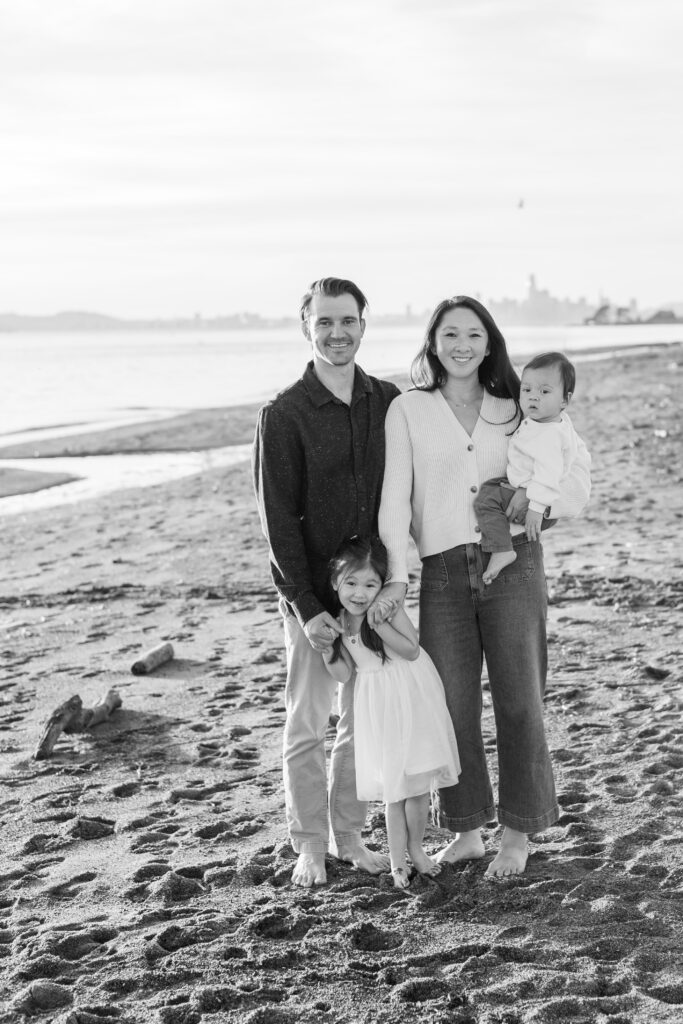
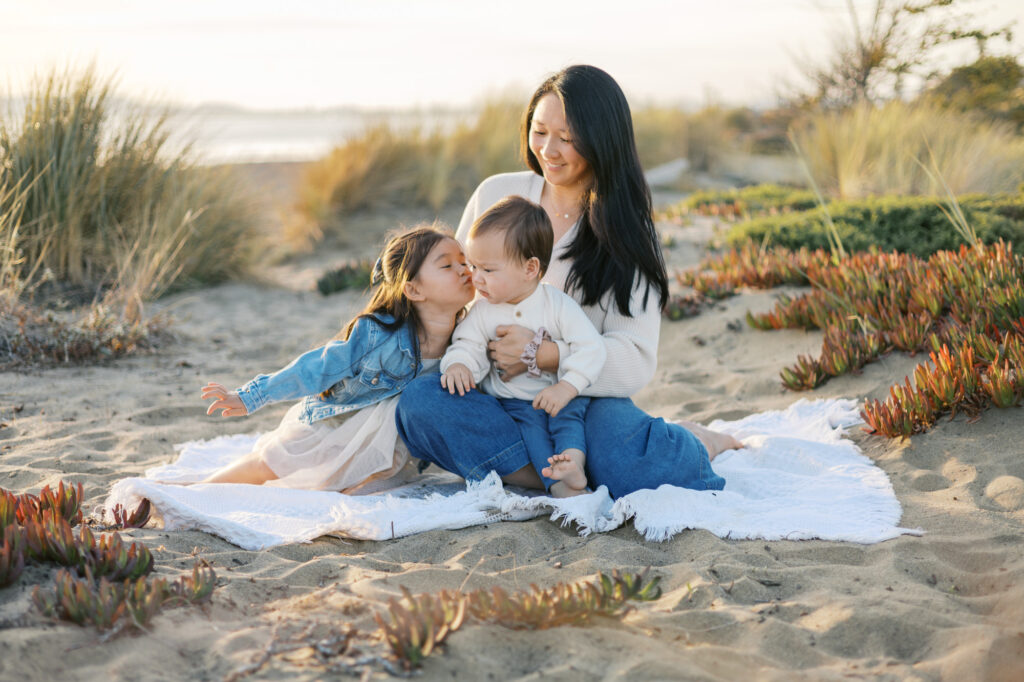
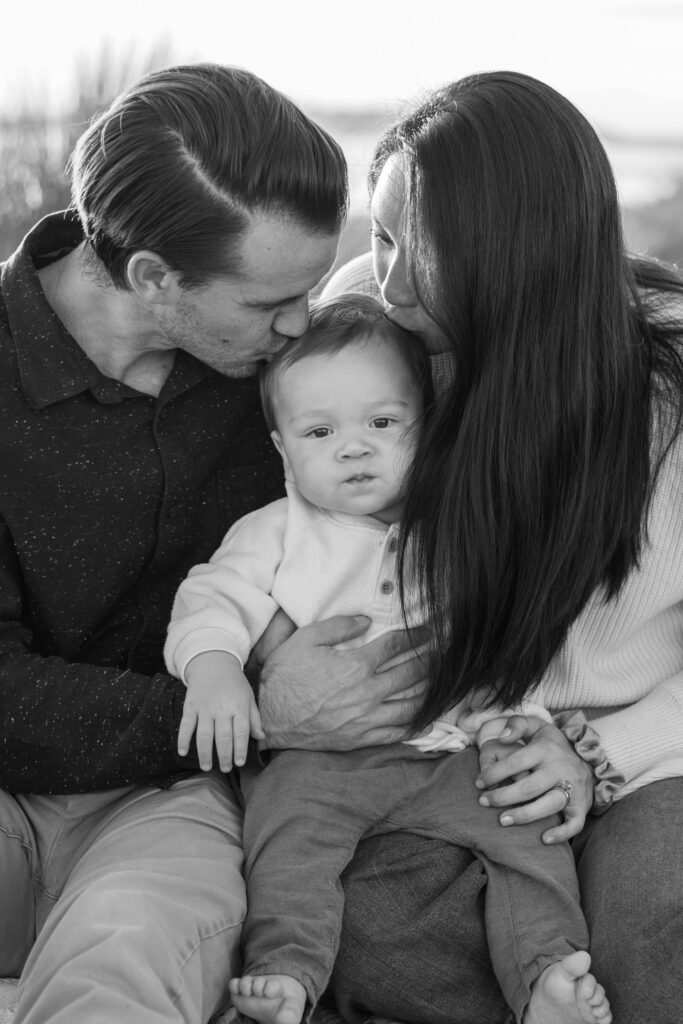
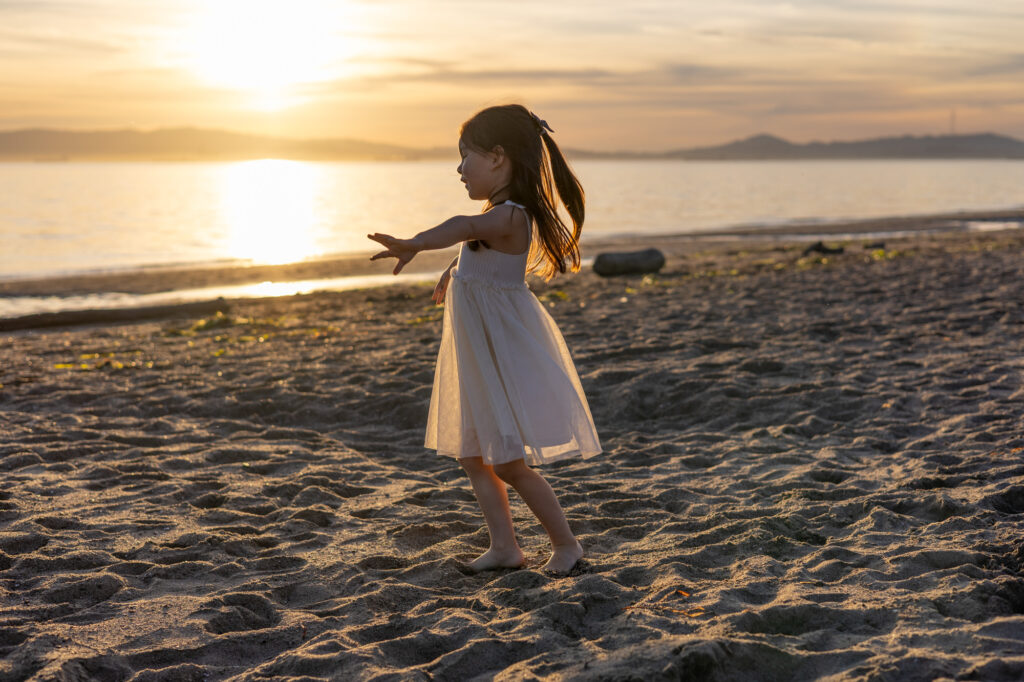
A Note on Different Ages
How you prepare your kids for family photos looks slightly different depending on their age.
Babies under 1: Honestly, prep is minimal — their mood is mostly about timing. Schedule the session around their best window (usually the longer wake period in the late afternoon for golden hour), make sure they’re fed just before, and bring a backup outfit. The rest is out of your hands in the best way.
Toddlers (ages 1–3): This is the age where your own energy matters most. They have no capacity to perform on command, which is actually a gift — it means everything we capture is real. Keep the morning calm, bring a comfort item if your child is shy, and fully read the toddler post before your session.
Preschool (ages 3–5): Old enough to understand “we’re taking pictures today” but young enough that it’s meaningless unless they’re engaged in something fun. The less you explain and the more you just let them play, the better. They will warm up — it usually takes about ten minutes, and I build that time into every session.
School age (6+): These kids can actually handle a brief explanation of what to expect, and they often surprise you. They may be more self-conscious than younger children, but they’re also more capable of following a direction or playing along with a prompt. The main thing: don’t put pressure on them by telling them the photos are important or that you’re spending money. Just make it feel like an outing.
What You Don’t Need to Do
A few things families stress about that genuinely don’t matter as much as they think:
You don’t need to practice smiling. Practiced smiles photograph as practiced smiles. Real smiles come from real moments, and real moments come from play.
You don’t need a perfectly behaved child. The sessions that look the most joyful are rarely the ones where the kids were cooperative — they’re the ones where parents were relaxed enough to laugh when things went sideways.
You don’t need to worry about the light, the timing, the angles, or whether you’re standing in the right place. I’ve got all of that. The only thing I need from you is your actual family, showing up as themselves.
Read more here for a complete guide to Bay Area family photography and about my favorite Bay Area photography locations.
Ready to book a Bay Area family session? Get in touch here — I’d love to hear about your family.
Rebecca Pattison is a lifestyle family photographer based in Alameda, California, serving the East Bay, Rebecca Pattison is a lifestyle family, maternity, and newborn photographer based in Alameda, California, serving the greater Bay Area including the East Bay, San Francisco, Marin County, and the Peninsula


BE THE FIRST TO COMMENT